Salt River Fields Officially Open

02112011-srf-jw0617.jpg

Photography: Jon Willey


By Greg Dillard


In a short ceremony on Friday, officials from both the Arizona Diamondbacks and Colorado Rockies along with leaders of the Salt River Pima Maricopa Community dedicated Salt River Fields at Talking Stick.


The event featured several key speakers including President Diane Enos who thanked the many contributors, and welcomed everyone to the complex.


D-backs Managing Partner Ken Kendrick also took the podium and proclaimed, “It’s a great day to be a Diamondback.”


Kendrick was just one of the speakers who stressed the importance of the relationship between the two teams and the Community.


“They’ve been great partners throughout,” Kendrick said. “It’s a great point of pride to them that Major League Baseball has come to their community, and we have a facility like this on their land. They’re exceptionally happy to have us, and we’re very proud to be their partner.”


D-backs President and CEO Derrick Hall followed Kendrick and spoke of his outstanding relationship with late Rockies President Keli McGregor.


Prior to the grand opening, the Keli McGregor Reflection Trail was dedicated. The trail is located outside of the main stadium and behind home plate, and is in honor of the late Rockies President who passed away in 2010.


It was an emotional time for members of the D-backs and Rockies organization, and for McGregor’s wife Lori, who represented her husband.


Hall remains proud of what he and McGregor envisioned for the Spring Training complex.


“It means a lot to me that Keli and I dreamt it together, designed it together, and it’s terribly sad that he can’t be here today to see the end result,” Hall said. “I know he’s here in spirit. He would’ve been so proud. I’m proud of him. I’m proud of our friendship, and I’m proud of what we accomplished together.”


Salt River Fields at Talking Stick is a one of a kind facility equipped with the largest video board in the Cactus League, 12 practice fields, and an elaborate stadium.


Hall is confident that fans will be impressed when they attend games.


“Not only that it’s the most beautiful facility by far,” Hall said, “but I think the location. The location sets us aside. It’s got breathtaking views, it’s completely surrounded panoramic views every where you look. It is by far the most superior complex, and that was our goal from the beginning.”


The action at Salt River Fields will begin to pick up next week when pitchers and catchers hold their first workout on Monday. The first game of the Spring Training season will come on Saturday, Feb. 26 between the D-backs and Rockies.  
Three Former D-backs Heading to Japan

06142008-kc-jw0508.JPG

Photography: Jon Willey


Right around Christmastime, we learned that former D-backs infielder Rusty Ryal was being sold* to the Yomiuri Giants of the Japanese Central League. As it turns out, he won’t be the only former D-backs player to suit up in Japan this year.


Patrick Newman has a blog entry up at Fangraphs.com detailing the list of former Major League players who will see action in Japan, including three former D-backs: Ryal, Byung-Hyun Kim, Chad Tracy. Another Japan-bound player, Evan MacLane, played for the D-backs’ Triple-A Tucson club from 2007-09 but never actually played in a big league game with the team.


Here’s a quick glimpse at what each did in a D-backs uniform:


Tracy — 704 games, 2,587 plate appearances, .278 average, 79 home runs, 33 RBI… played on the 2007 club that won the NL West


Kim — 245 games, 325 2/3 innings pitched, 70 saves, 806 strikeouts… played on the 2001 World Series champions and pitched in the 2002 All-Star game


Ryal — 134 games, 290 plate appearances, .263 average, 6 home runs, 20 RBI… played five positions as a utility player for the D-backs the last two seasons


For all three, the move to Japan is probably a good one. Tracy had trouble staying healthy and finding playing time when he was healthy over the last couple years with the D-backs, Cubs and Marlins. Kim hasn’t pitched in the Majors since 2007 and played for the Orange County Flyers in the independent Golden Baseball League last year. Ryal didn’t have a role with the D-backs in 2011 as the team signed utility players Geoff Blum and Willie Bloomquist this offseason.


Good luck to all three guys (as well as almost-former-Diamondbacks MacLane) and hopefully they can make the best of their experience in Japan. I didn’t have much of an opportunity to get to know Kim, he was traded about a month after I began working for the D-backs, but Tracy and Ryal are both classy guys, and I wish them well.


*  While the term is that a team is selling a player, it’s up to the player. The way it works is a player chooses to sign a contract with a club in Japan. But if he isn’t a free agent, the Japanese club has to pay for his rights as a way of “trading” for him. Since Ryal was still under contract with the D-backs, that’s how it went down this offseason. It works essentially the same was as when a Major League team pays a posting fee to acquire a Japanese player, like when Daisuke Matsuzaka was “sold” to the Boston Red Sox prior to the 2007 season. Matsuzaka wasn’t a free agent in Japan, so Boston had to pay for the rights.


So when read that a player was “sold to a Japanese team,” don’t think that the guy woke up one morning to find out his team just dealt him to Japan. But if that could happen, it would probably look like this fantastic, elaborate prank the Phillies played on pitcher Kyle Kendrick in Spring Training in 2008.


D-backs Acquire Galarraga

Galar.jpg

Photo by John Grieshop/MLB Photos via Getty Images


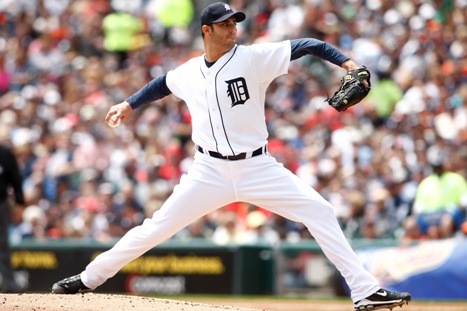
Prior to the 2010 baseball season, Detroit Tigers fans and fantasy baseball players knew the name Armando Galarraga, but most of America probably didn’t.


By the middle of the 2010 season, he was a household name across the country.


You must know the story by now: Galarraga recorded the first 26 outs of a would-be perfect game against the Cleveland Indians. The 27th batter hit a ball between first and second base that was fielded by Tigers first baseman Miguel Cabrera, who flipped the ball to Galarraga just beating the runner to the bag. But the call was made incorrectly on the field, and the game goes as a one-hitter in the record book.


The thing is, if that’s all that happened, the sports world may have moved on quickly. But the indelible image of that day isn’t just the call at first base. The things that are remembered are the great deal of class and grace that Galarraga displayed in what was surely a stressful situation and the thoughtful way he spoke of the umpire, Jim Joyce, who acknowledged the mistake after the game. Throughout it all, he was sportsmanship defined.


On the field, Galarraga was effective, perhaps even more so than his year total numbers indicate. For the year, Galarraga was 4-9 with a 4.49 ERA, with 51 walks and 74 strikeouts in 144 1/3 innings. But he had three poor starts in September that weighed down his overall numbers. Outside of those, Galarraga posted a 3.79 ERA in his other 22 starts combined.


Galarraga became available this offseason when the Tigers chose to go in a different direction for their 40-man roster, and for the D-backs, it was a great opportunity to add to the depth of veteran pitching, and add to the competition for work in Spring Training. To acquire him, the D-backs sent minor league pitchers Kevin Eichhorn and Ryan Robowski to Detroit.


The D-backs will welcome Galarraga into the mix, not necessarily because he’s a classy guy, but because he’s a pitcher who has had some success in the big leagues and can be helpful to the staff. But for an organization that made a concerted effort to improve its culture in the clubhouse and on the field, the fact that Galarraga is a classy guy certainly helps.

A Look at Spring Training Non-Roster Players

05272009-sd-rs0069.JPG

CLAY ZAVADA — Photography: Rick Scuteri


Every year, teams have somewhere between 10-20 non-roster invitees at Spring Training, guys who aren’t on the team’s 40-man roster. It’s always a mix of prospects and veteran players who didn’t sign Major League contracts in the offseason. But every year, there are a handful of potential gems on the non-roster list.


Here’s the D-backs’ list of non-roster players that you’ll be watching in Spring Training (their names are clickable for statistics):


Pitchers

Matt Gorgen

Mike Hampton

Wade Miley

Jarrod Parker

Clay Zavada


Catchers

Rossmel Perez

P.J. Pilittere


Infielders

Paul Goldschmidt

Chris Owings

Cody Ransom

Andy Tracy


Outfielders

Collin Cowgill

Marc Krauss

Wily Mo Pena

A.J. Pollock

David Winfree


Some thoughts on a few of these guys:


Matt Gorgen — Gorgen was the player Arizona acquired from Tampa Bay in the trade that sent Chad Qualls there late last year. I’m interested in seeing Gorgen pitch and I’m really curious as to why the Rays made him available, especially when the team lost so many relief pitchers to free agency this year. He’s got pretty excellent minor league numbers and according to Jerry DiPoto, as Arizona Republic writer Nick Piecoro mentioned back in September, Gorgen has good stuff as well. If you’re looking to find an interesting sleeper to emerge out of the non-roster invitee group, Gorgen could definitely be your guy.


Jarrod Parker — Like pretty much everybody else, I’m anxious to see how Parker looks in Spring Training. When last we saw him pitch, he was fresh off throwing some really impressive heat in the 2009 Futures Game, but an elbow injury shut him down for the 2010 season. He gave updates on Twitter throughout the year on his conditioning. When Parker is on, he’s darn-near unhittable but the organization is going to be patient with him after major surgery.


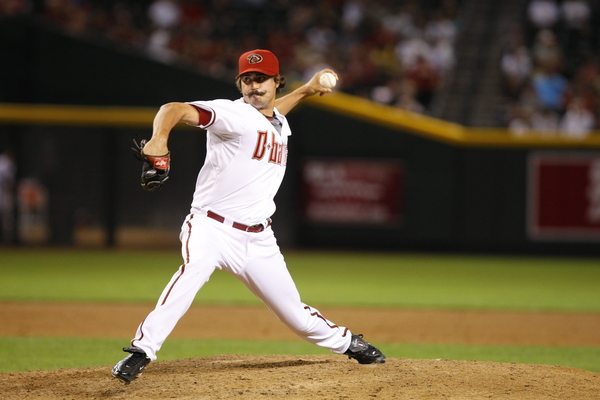
Clay Zavada — Elbow surgery also cost Clay Zavada his 2010 season, so one of the bright spots of the 2009 D-backs is going to work toward getting back in the big leagues this year. You won’t meet many ballplayers that are nicer than Zavada, so I would imagine there are going to be a lot of fans pulling for him to succeed this spring.


Chris Owings — Of the D-backs’ highly picked high school draftees in 2009 (Bobby Borchering, Matt Davidson, Chris Owings), this shortstop out of South Carolina has been the most consistent both at the plate and in the field. A foot injury robbed Owings of about two-thirds of his season last year, but he was playing quite well before he went down. Considering the depth the team added this year with Melvin Mora, Geoff Blum and Willie Bloomquist, there are a lot of infielders in camp. There aren’t that many Spring Training at bats to go around, so Owings’ stay on the big league side might not last very long.


Marc Krauss — Along with teammate Paul Goldschmidt, Marc Krauss absolutely killed the ball in the High-A California League with Visalia last year. Krauss was then one of the few players below Double-A that get a chance to play in the Arizona Fall League. Playing for the 2010 champion Scottsdale Scorpions, Krauss was great, batting .298 with a .404 on-base percentage, with four home runs in 22 games. The guy can really hit, and I’m anxious to see what he can do against some big league pitching.


Wily Mo Pena — I’m mostly just excited to watch Wily Mo Pena take batting practice. He has massive raw power (link: check out this stunning home run he hit at Toronto’s Rogers Centre back in 2007), always has, and hit pretty well in limited duty for the Padres’ Triple-A Affiliate last year.


A.J. Pollock — With really advanced fundamental skills coming out of college, A.J. Pollock looked like he was on the fast track until he hurt his elbow going after a ball in the outfield in Spring Training last year and lost a whole season because of it. He also played in the Fall League and hit quite well for average — batted .313 with six doubles in 16 games — and hopefully his power comes along with health.

Salt River Fields Nearly Finished

D-backs photographer Jordan Megenhardt has been going to Salt River Fields regularly since construction began, and he went this morning to document the progress. What you’ll notice from these photos is that the facility is nearly done, which is very exciting for those of us who have been monitoring things closely.

We’ll head out to the facility in the coming weeks for a tour, and post some video here on D-blog. In the meantime, here are some of the things Jordan saw today:


http://www.flickr.com/apps/slideshow/show.swf?v=71649

D-backs and Hall of Fame Voting

robalom.jpg

Photography: Barry Gossage


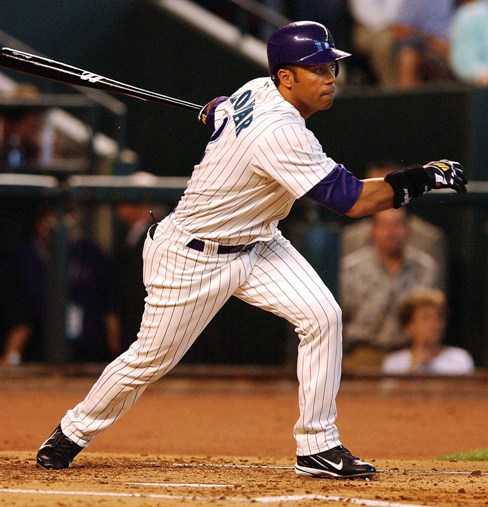
As you may have heard by now, second baseman Roberto Alomar was elected to the Baseball Hall of Fame on Wednesday, a deserving honor for a player who batted .300 with a .371 on-base percentage and played spectacular defense over 2,379 games in the Major Leagues.


Alomar was also, notably for us Arizonans, the first Hall of Famer player to ever suit up and play for the D-backs. He played 38 games for the D-backs in 2004, his final year in the big leagues.


I figured this would be a good opportunity to look at how former D-backs players have fared on ballots since 2004, the first year any former D-backs player would ever be eligible for Hall voting (Arizona began play in 1998, and a player must be retired for five seasons to be eligible).


The number next to the player’s name is the total vote count for him and the percentage of possible votes he received. Any player over 75 percent is elected to the Hall of Fame, while anyone under five percent falls off the ballot. This is for D-backs players only, so it wouldn’t count former coach Robin Yount, who is a Hall of Famer, or current coach Alan Trammel, who is still on the ballot.


2004

None


2005

None


2006

None


2007

Devon White – 0 – 0%

Bobby Witt – 0 – 0%


2008

Todd Stottlemyre – 1 – 0.2%


2009

Mark Grace – 22 – 4.1%

Matt Williams – 7 – 1.3%

Jay Bell – 2 – 0.4%

Dan Plesac – 0 – 0%


2010

Roberto Alomar – 397 – 73.7%

Shane Reynolds – 0 – 0%


2011

Roberto Alomar – 523 – 90.0%

Raul Mondesi – 0 – 0%

Carlos Baerga – 0 – 0%

Lenny Harris – 0 – 0%


Here are some of the eligible players who will come up on the ballot in future years:


2012

Tony Womack

Jeff Fassero

Tim Worrell

Terry Mulholland

Rick Helling

Felix Rodriguez


2013

Curt Schilling

Steve Finley

Bob Wickman

Shawn Green

Jeff Cirillo

Tony Batista

Mike Myers

Royce Clayton

Reggie Sanders

Damian Miller


2014

Luis Gonzalez

Richie Sexson

Shawn Estes


2015

Randy Johnson

Tom Gordon

Alan Embree

Tony Clark

D-backs Reward 20 Families with 2011 Season Ticket Scholarships

Team Awards Record 75 Season Tickets Valued at Nearly $115,000


Through their annual one-of-a-kind season ticket scholarship program for fans experiencing financial hardships, the Arizona Diamondbacks announced today that 20 families will receive a total of 75 lower-level season tickets valued at nearly $115,000 to attend D-backs games at Chase Field during the 2011 season.


A group of D-backs employees, including President & CEO Derrick Hall and Special Assistant Luis Gonzalez, surprised Phoenix resident Randi Caudle at her home this morning by awarding her four season tickets for her family to attend D-backs games at Chase Field in 2011. Caudle’s husband, Dale, nominated her for the season-ticket scholarship program because they have not been able to attend many D-backs games over the past couple of years since she is the family’s soul provider by working full-time at Fry’s Food Store and also attending Estrella Mountain Community College as a full-time student.


The D-backs also provided parking passes and food concession coupons to some families experiencing additional hardships. The team received nearly 100 online nominations prior to the Nov. 30 deadline. Those families or individuals who did not receive season tickets were awarded tickets to multiple games throughout the 2011 season.


“Challenging economic situations for the Caudle family and the other 19 families we awarded season-ticket scholarships to this year are the reason we created this first-of-its-kind program three years ago,” Hall said. “It is extremely rewarding to give assistance to our fans during a time in need because we can offer a break to some of the difficult circumstances these families are experiencing.”


The D-backs have given a total of 179 season tickets valued at nearly $365,000 to 57 families during the season ticket scholarship program’s four years of existence.


Keeping ticket prices affordable for families to attend games at Chase Field has been a priority for the D-backs. The team has had the lowest average ticket price among all Major League Baseball teams and all Valley professional sports teams for the last four seasons. The D-backs identified many affordable merchandise and concession items throughout Chase Field during the 2010 season with their “value items” logo, including more than 12 concession items that were $4 or less and seven items in the Team Shop available for less than $10.

D-backs Find a Lefty in Paterson


Jpater.jpgPhotography: Jordan Megenhardt


In need of some left-handed help to add to a bullpen that was starting to lean dramatically to the right, the D-backs made a pair of moves over the last two days that should ignite some good competition in Spring Training.


On the heels of re-signing veteran lefty Mike Hampton to a minor league deal, the D-backs selected Joe Paterson in the Rule 5 Draft on Thursday morning. If you made it out to watch the D-backs prospects play for the Scottsdale Scorpions in the Arizona Fall league, you might already be familiar with Paterson, who was there representing the San Francisco Giants. (If the above photos look strange to you then, well your instincts are correct. Paterson was loaned to the Phoenix Desert Dogs for a day to get some work and help give a day off to some Desert Dogs hurlers.)


Paterson’s effectiveness is tied as much to his funky delivery as his actual stuff as the photos here should demonstrate. And lefthanders do seem to have a great deal of trouble picking up his pitches; they hit just .216 off him this year. He’s a nice, low-risk Rule 5 pick because lefty specialists are the kind of position that can be overpaid in the free agent market relative to the finite amount of innings they pitch. And because Hampton is on a minor league deal, if he and Paterson are going neck-and-neck next March, they actually could keep both by moving Hampton to Reno out of the gate.


The focus was pretty obvious for the D-backs during these winter meetings — the pitching needed major upgrades. The team, already happy with the first four spots in the rotation (Kennedy/Hudson/Saunders/Enright) was able to take a flier on a fifth starter in Zach Duke while also adding four new pieces to the bullpen (Putz/Hernandez/Mickolio/Paterson).


“The starting pitching is better, the bullpen is better, character I think will be better, experience is better, versatility will be better,” D-backs General Manager Kevin Towers said.


“There may be less power but we scored runs last year. We scored enough runs but we just didn’t hold them, if you look at our run differential. We were about league average in offense, they just scored too many runs on us.”


Random note: Joe Paterson played college baseball at Oregon State University. He pitched on the Beavers’ 2006 National Championship winning team where he was a teammate of D-backs outfielder Cole Gillespie.

Bullpen Improves in Orioles Trade

Hernand Greg Fiume-Getty Images.jpg

Photography: Greg Fiume/Getty Images


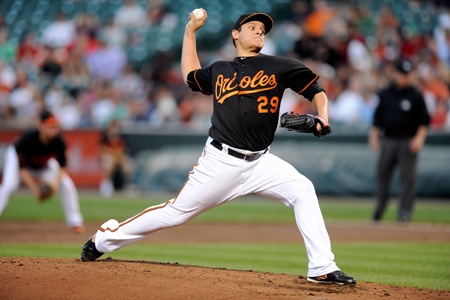
The D-backs’ most significant move so far this offseason was the trade that sent third Mark Reynolds to the Baltimore Orioles for a pair of right-handed pitchers.


Those pitchers — David Hernandez and Kam Mickolio — will add depth to an Arizona bullpen that is getting stronger by the day.


Hernandez is the key piece in the deal, as he experienced some real success after being moved from the rotation to the bullpen last year, which suits him in part because he is primarily a two-pitch guy (fastball/curve combo with an occasional changeup).


He made his last start of the year on May 21, and from then on was quite good. In his last 33 games, he threw 37 innings with a 3.16 ERA, with 45 strikeouts and 13 walks.


Hernandez’s opponent-hitting numbers were solid in that time, holding batters to a .236 average, .310 on-base percentage and a .371 slugging percentage. Hernandez should easily slide into the back of the bullpen for the D-backs this season, as his stuff should work in a late-inning role. He dials up his fastball in the low- to mid-90s (average fastball was 93.6 MPH in 2010).


Mickolio is a bit more of a mystery, as he has less big league experience. He’s pretty huge — 6-foot-9, 255 pounds, which I think makes him the third-tallest D-backs player ever, after Randy Johnson and Jon Rauch — and has made a handful of appearances for Baltimore over the last three years. In that time he’s posted a 4.32 ERA with 26 strikeouts and 14 walks in 25 innings.


His ERA has been high at Triple-A the last two years (5.80 in 2009 then 6.37 in 2010) although his strikeout and walk rates were essentially the same as when he was quite successful there (1.80 ERA) in 17 2008 games. He might well be an example of ERA being a poor way to judge a reliever.


Random note: Mickolio was born in Wolf Point, Mont. and went to high school in Bozeman, making him one of only three Montana natives playing in the big leagues right now (along with Taylor Tankersley, who was born in Montana but didn’t go to H.S. there, and Rob Johnson). There have only been 26 Montanans all time in the big leagues.