Category: Dailies
Roof Likely to Be Open Monday
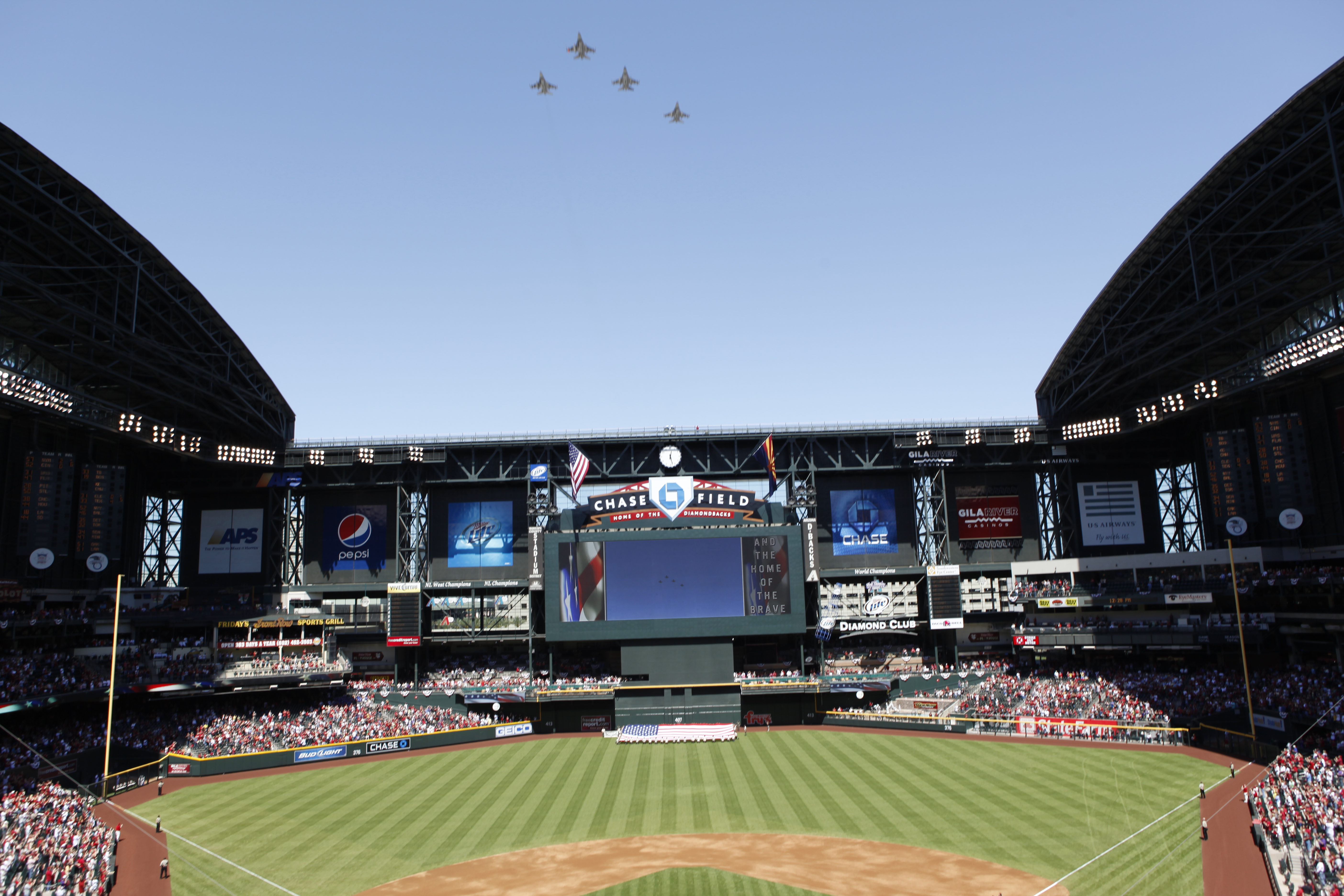
The word going around is that the Chase Field roof will be open for the D-backs Opening Day game against the Padres on Monday at 2:10 p.m.
This is great news, obviously, as the ballpark always looks beautiful with the sunshine flowing in. Arizona has a very small window of time in which it’s possible to have an open roof for a day game, so it’s a nice luxury while we’ve got it. Weather.com’s 10-day forecast shows sunny with a high of 78 degrees on Monday.
The roof was generally closed for all day games up until 2007-08, when the D-backs began opening it more and more because of strong fan response. D-backs fans wanted to enjoy the sunny, warm Arizona weather, and the organization was happy to oblige.
There are many ways you can get to Chase Field for Opening Day — visit dbacks.com/tickets, call 602.462.6798 or 888.777.4664, visit the Chase Field Ticket Window or purchase them at Ticketmaster Outlets and Fry’s Food Stores.
Dan Haren will take the ball on Opening Day for the second time in his career, but the first with the D-backs. He previously started for the Oakland Athletics on Opening Day back in 2007.
Haren is making his last tune-up start today against the Texas Rangers in the D-backs’ final game at Tucson Electric Park.
***UPDATE***
— The team announced today that country music star Joe Nichols will perform the National Anthem on Opening Day. Nichols’ current hit single, “Gimmie That Girl,” is one of the hottest songs in the country right now. He has released a total of six studio albums for Universal South and has had 12 Top 20 singles on the country charts, including the No. 1 hits “Brokenheartsville” and “Tequila Makes Her Clothes Fall Off.”
— Also, former Arizona Cardinals quarterback (and two-time league MVP and Super Bowl MVP and five-time Pro Bowler…) Kurt Warner will be on hand to throw out the ceremonial first pitch.
Reynolds in Good Company
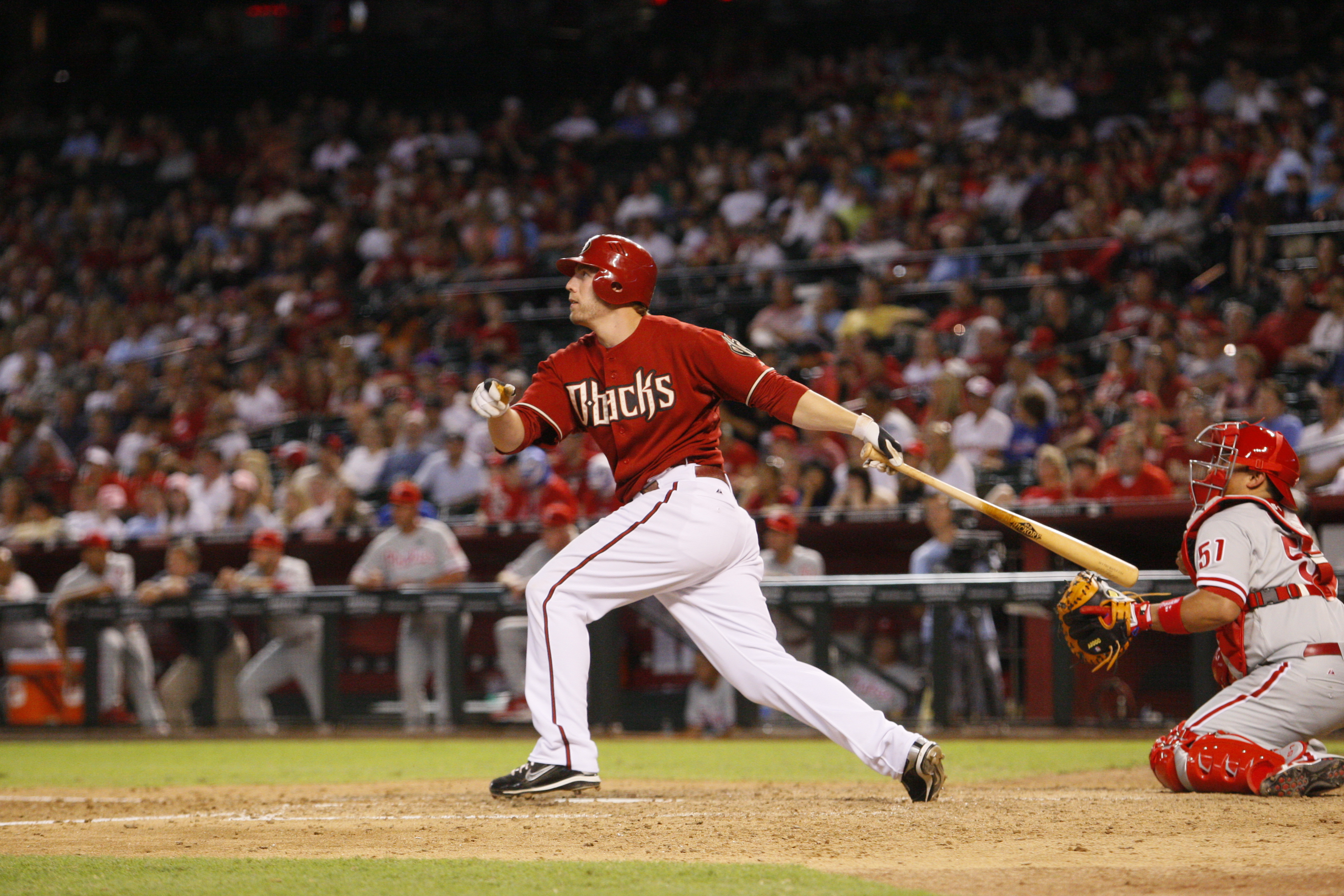
Mark Reynolds on his contract:
http://www.odeo.com/flash/audio_player_standard_gray.swf
Josh Byrnes on the Reynolds contract:
http://www.odeo.com/flash/audio_player_standard_gray.swf
Mark Reynolds and the D-backs agreed to a contract extension this week for three years and an option for a fourth, allowing the club to buy out a pair of arbitration years and possibly a year of free agency if the D-backs exercise the option.
Reynolds is yet another good, young player signed to a multi-year deal for the D-backs this offseason. He joined Justin Upton, who signed a deal two weeks ago, and Edwin Jackson who signed a deal back in February.
Here’s a little statistical fun for you.
These are six players in their Age 25 season. The most recent is Reynolds, obviously. These players weren’t chosen at random. These are all guys who are sometimes derisively deemed “high-strikeout” players, but they’re all significant offensive contributors to their teams.
Player V – 1971 (150 games) 32 HR, 29 2B, 161 SO, .352 OBP, .508 SLG, 860 OPS
Player W – 1975 (158 games) 38 HR, 34 2B, 180 SO, .367 OBP, .523 SLG, .890 OPS
Player X – 2005 (160 games) 35 2B, 40 HR, 168 SO, .387 OBP, .540 SLG, 927 OPS
Player Y – 2005 (88 games) 22 HR, 17 2B, 100 SO, .356 OBP, .567 SLG, .924 OPS
Player Z – 2006 (159 games) 19 HR, 31 2B, 174 SO, .335 OBP, .433 SLG, .773 OPS
Reynolds – 2009 (155 games) 44 HR, 30 2B, 223 SO, .349 OBP, .543 SLG, .892 OPS
For comparison’s sake, this is what the counting stats for “Player Y” would be if multiplied by 1.8 to reach 158 games (40 HR, 31 2B, 180 SO).
The names will be listed at the end of this blog.
To add another layer, Reynolds has more positional value than all but one of these players. Reynolds and “Player W” are both third baseman, while four are outfielders, one is a first baseman. Only one of them, an outfielder, is even considered an above-average or better defensive player.
Reynolds gives the D-backs some significant punch in the middle of the lineup, but it’s made even more valuable when you consider the position scarcity. Finding an outfielder who can hit 40-plus home runs is easier to do than finding a third baseman who can do the same. And by playing third, Reynolds gives the D-backs the ability to use those outfield positions to find more offensive contributors.
Third base is one of the more offensively scarce positions in baseball, along with second base, right behind shortstop and catcher.
In 2009, National League third basemen posted a cumulative .756 OPS, approximately 70 points lower than Reynolds. The average NL third baseman in 2009 had 20 home runs, 31 doubles, 83 runs and 83 RBI, all well below Reynolds’ totals (44/30/98/102).
It’s tough to say where Reynolds’ career trajectory will go, but it’s worth noting that every player (except Reynolds… for now) on the above list is an All-Star, and the two older ones are in the Hall of Fame.
Those names?
Player V – Reggie Jackson; Player W – Mike Schmidt; Player X – Adam Dunn; Player Y – Ryan Howard; Player Z – Curtis Granderson
ReynoldsBP from D-backs Insider on Vimeo.
It’s Sunny at Muni (let’s just all pretend that rhymes)
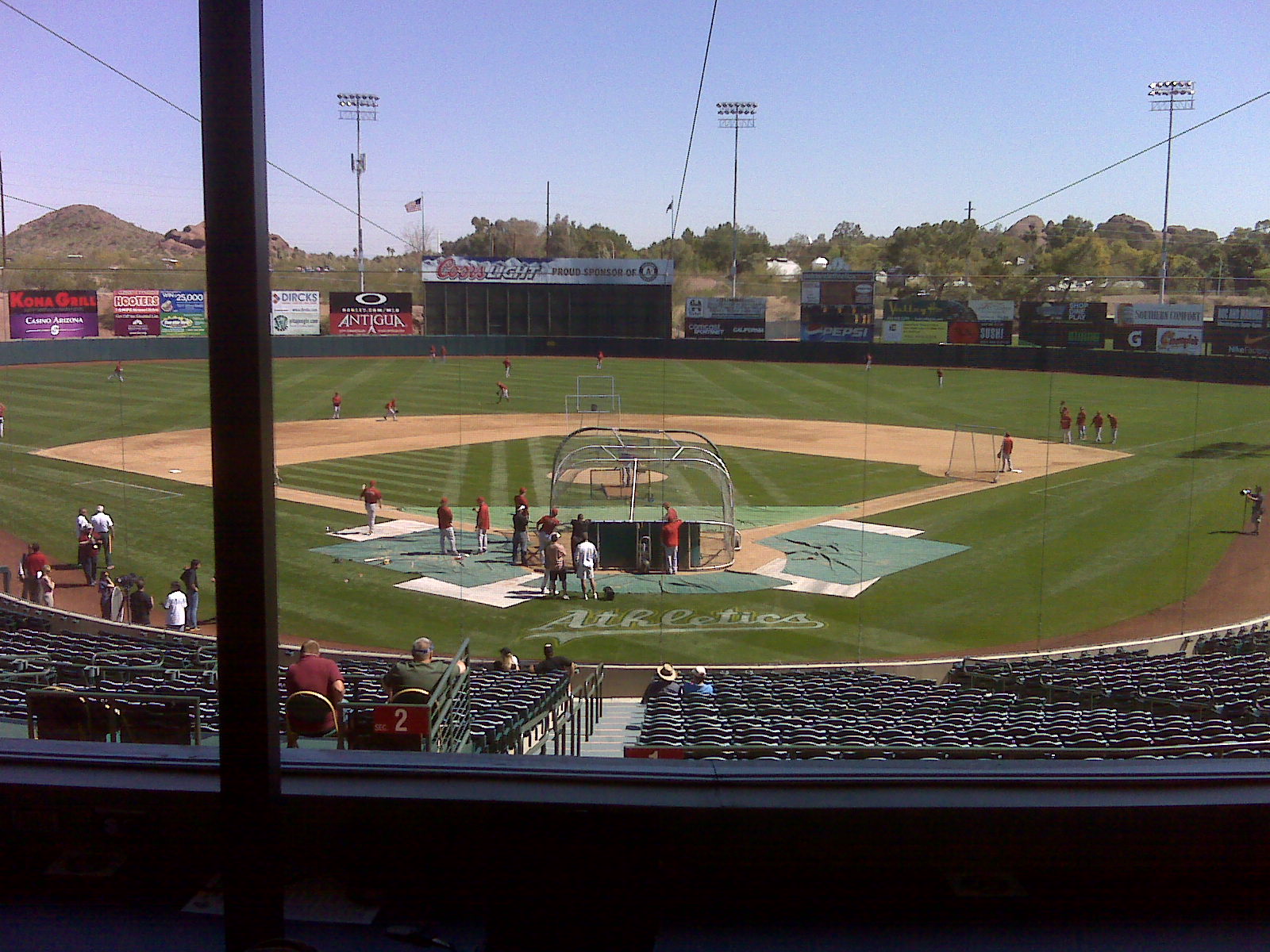
Ahoy hoy, it’s time for another D-backs Spring Training game. We’ve got most of the Arizona starters in the lineup again today.
The most interesting note of the lineup – Conor Jackson is getting some innings at first base. He’s going to be a full-time left fielder barring any unforeseen circumstances, but whenever Adam LaRoche needs a day off this year, Jackson could slide over to first. Good to get him some innings over there now.
D-backs
Chris Young – CF
Stephen Drew – SS
Justin Upton – RF
Mark Reynolds – 3B
Conor Jackson – 1B
Miguel Montero – DH
Ryan Roberts – 2B
Chris Snyder – C
Gerardo Parra – LF
Pitchers – Rodrigo Lopez, Kevin Mulvey, Zach Kroenke, T.J. Beam, Bob Howry
Athletics
Eric Patterson – CF
Mark Ellis – 2B
Kurt Suzuki – C
Kevin Kouzmanoff – 3B
Eric Chavez – 1B
Ryan Sweeney – RF
Jack Cust – DH
Gabe Gross – LF
Adam Rosales – SS
Pitchers – Gio Gonzalez, Tyson Ross, Brad Ziegler, Henry Rodriguez
As always, I’ll check in with some notes as the game progresses.
***Notes***
— Tomorrow’s pitchers for the D-backs vs. Royals in Tucson – D-backs: Billy Buckner, Loe Rosales, Chad Qualls, Clay Zavada, Blaine Boyer. Royals: Brian Bannister, Kyle Farnsworth, TBD.
— One of the fun things to watch at a Spring Training game is the unique way some players get ready. For example, Tony Abreu and Augie Ojeda worked on some middle infield skills, standing about 15 feet away from each other and firing the ball back and forth as quickly as they could. Cool thing to see.
— The “gasp!” you heard from miles away was the crowd reacting to Mark Reynolds launching a BOMB that may have hit a monkey in the Phoenix Zoo. It easily cleared the billboards in left-center. It was Reynolds’ second homer of the Spring (the first came yesterday) and gave the D-backs a 1-0 lead.
— Apologies for the scarcity of updates. Phoenix Muni is my favorite ballpark in the Cactus League, but this is definitely my least favorite wireless network.
Hola from Diablo!
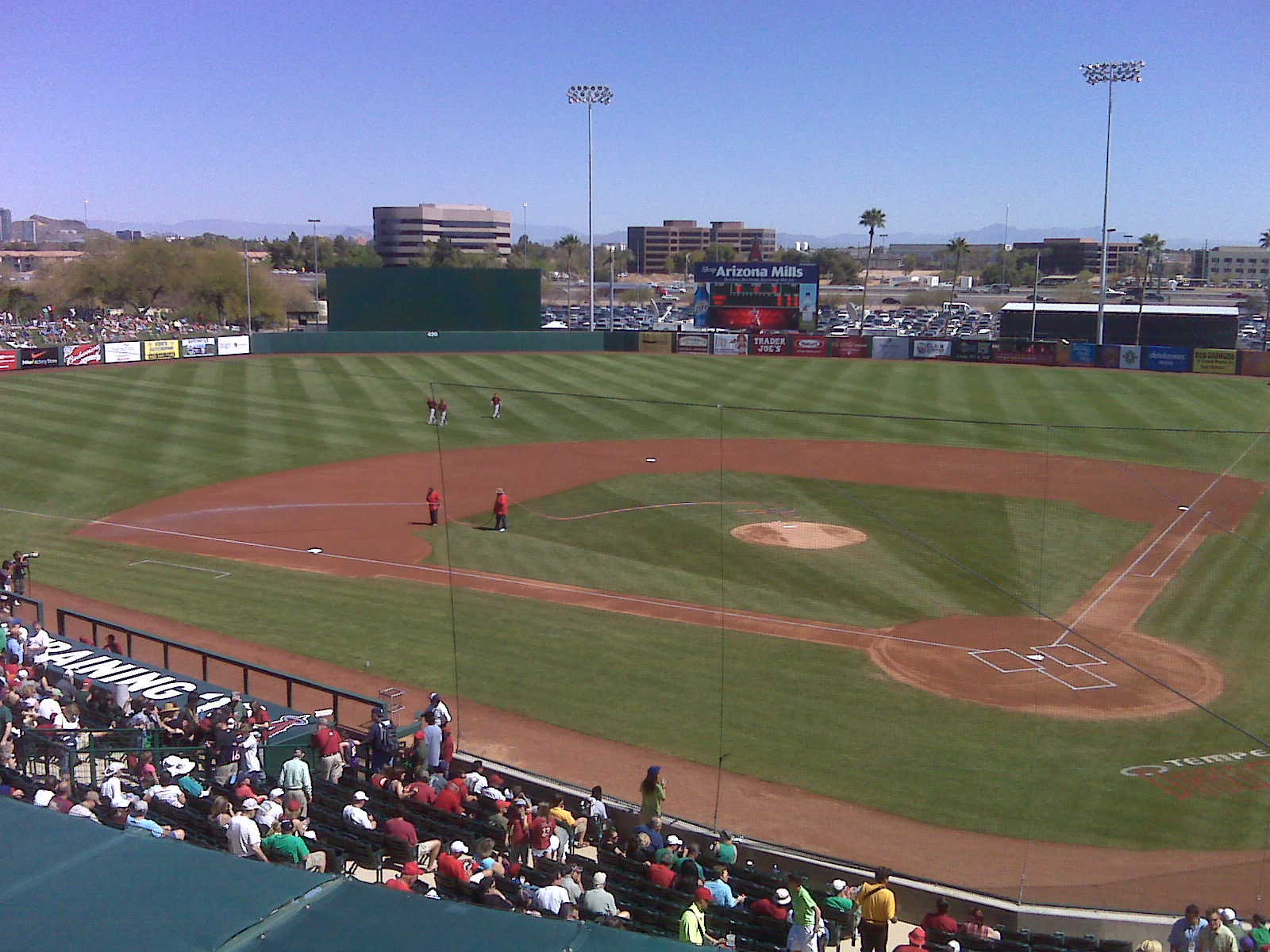
Happy St. Patrick’s Day, everybody!
It’s a gorgeous afternoon here at Tempe Diablo Stadium, where the D-backs are taking on the Los Angeles Angels of Anaheim.
We’re looking at, for the most part, all of the starters for both teams, so we definitely lucked out with the lineups. I’ll check in throughout the game with notes.
D-backs
Drew – SS
Jackson – LF
Upton – RF
LaRoche – 1B
Reynolds – 3B
Montero – C
Johnson – 2B
Young – CF
Snyder – DH
Pitchers: Ian Kennedy, Barry Enright, Esmerling Vasquez, Leo Rosales, Jordan Norberto
Angels
Izturis – SS
Kendrick – 2B
Hunter – CF
Matsui – DH
Morales – 1B
Rivera – RF
Wood – 3B
Mathis – C
Aldridge – LF
Pitchers: Joe Saunders, Matt Palmer, Rafael Rodriguez, Francisco Rodriguez, Travis Chick
***Notes***
— Kennedy has a chance to take a major step forward in his bid for a rotation spot with a good effort this afternoon. Bryan Augenstein was reassigned to minor league camp afternoon, creating one less guy in the competition for the back-end spots. With the way Kennedy has pitched so far, it does seem like a spot would be his to lose.
— Another time on base for Conor Jackson, getting hit in the foot with a pitch. He is just having a fantastic Spring, getting on base 14 times in 27 plate appearances.
— Upton follows it up with a hard single to left, runners on first and second with LaRoche and Reynolds coming up for the D-backs… and there it is, and RBI single for LaRoche, 1-0 D-backs.
— Angels tie it up quickly with a pair of long flyball doubles to right-center and center from Izturis and Kendrick, 1-1.
— Upton improves to 10-for-24 (.417) in Spring Training with another hit to left. Angels up 3-1 going into the top of the third.
— Kind of a rough one today for Kennedy, as Manager A.J. Hinch calls to the bullpen with runners on first and third, and four runs in with one out in the fourth.
— Reynolds just ripped a solo home run to left-center — his first home run of Spring Training — on the heels of a Rivera homer in the fifth that extended the Angels’ lead. It’s 6-2 Angels in the top of the sixth.
— A note for tomorrow, the pitchers for the D-backs/Athletics game at Phoenix Muni: Rodrigo Lopez, Kevin Mulvey, Zach Kroenke, T.J. Beam and Bob Howry. Watch Lopez and Mulvey tomorrow, they’re both vying for a rotation spot right now.
— Hinch said pre-game that, like today, he expects to run something close to the D-backs’ starting lineup out there several more times this spring, so he can get a feel for the regular order. With nothing firmed up, he did say that Jackson is looking “like a two-hole hitter,” though he likes the versatility of moving players to the top and bottom of the lineup. Drew and Johnson, for example, could bat No. 1 and No. 2, but could also find themselves lower in the lineup as well.
— RBI Triple to right-center field for Cole Gillespie, who continues to impress in Spring Training. He’s hitting .333 with 19 total bases in 26 at-bats (.703 slugging) thanks to six extra-base hits. He was quickly driven in on an RBI single by Drew Macias… 6-4 Angels in the top of the seventh.
— Worth noting: The D-backs are getting a nice applause with every hit this afternoon. The Angels do draw well, but this is quite a D-backs-favored crowd. Third consecutive sellout for the Angels today, with 8,911 packing Tempe Diablo today.
— Brandon Allen almost gave the D-backs a lead right there… With two on, Allen mashed a ball down the left field line, but just foul.
— Allen shoots a ball into left center for a single, scoring Macias and moving Augie Ojeda to third, 6-5 Angels.
— John Hester draws a walk. Bases loaded for pinch hitter Evan Frey as the Angels make a pitching change.
— Frey strikes out as the Angels get out of the inning still up by one, 6-5.
— Just got word: Mariners pitcher Cliff Lee has received a five-game suspension and an undisclosed fine for intentionally throwing a pitch in the head area of Chris Snyder during the third inning of the Mariners/D-backs game on Monday at Tucson Electric Park.
— Wow, tack on another two total bases for Gillespie as he hits a double down the left-field line. The kid just rolls out of bed and hits for extra bases these days.
— Drew Macias ties it up with a two-out wall-ball double to right center to plate Gillespie. Macias only had a chance to hit the double because Angels third baseman Freddy Sandoval dropped a popup in foul territory after seemingly having trouble tracking the ball in the sun. 6-6 in the bottom of the eighth with Esmerling Vasquez coming to the mound for the D-backs.
— John Hester hits a sacrifice fly to center field to score Ojeda, giving the D-backs a 7-6 lead in the top of the ninth.
— Vasquez gets Erick Aybar to fly out to left to pick up the win, 7-6, for the D-backs who have won seven of their last eight to improve to 9-6-1.
Prospects to Watch Part III
If
the three days of prospects we’ve featured on this blog (part 1 is here and
part 2 is here), this is absolutely the best group. Must be something about
high-in-the-alphabet teams loading up on minor league talent (hey, it holds in
the Grapefruit League, too… Tampa Bay has the best set of prospects over there
and, probably, in all of baseball).
There
are some legitimate future All-Stars on this list — Neftali Feliz, Buster
Posey, Michael Taylor, Dustin Ackley, Justin Smoak. Get a good look at them
now.
As
I’ve noted before, if a player is on a Spring Training roster, and appears on
two of the Top 100 (or 101) lists posted by Keith Law, Kevin Goldstein and
Baseball America, we’re giving you a heads up.
Check
out those three lists for yourself here:
Goldstein:
http://baseballprospectus.com/article.php?articleid=10142
Law:
http://insider.espn.go.com/mlb/insider/columns/story?columnist=law_keith&id=4856310
Baseball
America:
http://www.baseballamerica.com/today/prospects/rankings/top-100-prospects/2010/269546.html
Next
week, I’ll reprint the entry from the Spring Training edition of D-backs
Insider featuring Arizona prospects, perhaps with a quick look at how players
are doing so far.
Oakland Athletics
(March 12 in Tucson, March 18 in Phoenix)
Goldstein:
20 – – – Law: 24 – – – BA: 29
There
is some debate, as you can see from the rankings, of which huge slugger should
be first in the Oakland rankings, the 6-foot-6 Taylor or the 6-foot-4 Chris
Carter. There is little debate that they both profile as middle-of-the-order
bats down the road, so they’re the type of prospects worth checking out at
Spring Training. Camp out on the outfield grass and hope to catch a home run.
Law gives the edge to Taylor because he’s more of a total athlete than the more
prototype slugger Carter. Says Law, “a good corner outfielder who hits
.300-plus with lots of walks and doubles and 15-20 homers is an above-average
player and not far below star caliber.”
Goldstein:
11 – – – Law: 33 – – – BA: 28
Carter
is more of your run-of-the-mill American League first base/DH type, and he
could wind up in the DH spot down the road. The D-backs sent Carter to Oakland
in the Dan Haren deal back when he was a little more raw in Single-A. In
addition to the home runs, his walk total his risen every year of his career,
which is a good sign for a power guy. Says Goldstein, “He made impressive
adjustments against more advanced pitching to close up some holes in his swing,
reducing his strikeout rate as the season wore on, leaving most to believe
he’ll hit for average as well.”
Goldstein:
86 – – – Law: 93 – – – BA: 52
The
Athletics’ first-round pick out of USC in 2009 could be a quick riser.
Shortstop isn’t a position where the Athletics are loaded at either the Major
League or minor league levels, so he can earn his way up. He only played five
games at High-A last year, so there isn’t much of a statistical sample to look
at. He’s pretty big for a shortstop at 6-foot-3, so we’ll see if he sticks
there.
San Diego Padres
(March 22 in Tucson, March 29 in Peoria)
Goldstein:
47 – – – Law: 46 – – – BA: 57
Castro
took some big steps forward in 2009. With a promotion to full-season Single-A,
he went 10-6 with a 3.33 ERA in the Midwest League, but even more impressively,
improved his strikeout numbers and significantly improved his walk rate. Castro
throws hard and has three good pitches, so he’ll be fun to see if you catch him
before he’s reassigned. Says Law, “Castro led the Midwest League in strikeouts
in 2009, and while he wasn’t young for the level, his arsenal is legit and will
play at higher levels.”
Goldstein:
64 – – – Law: NA – – – BA: 90
The
Padres’ second round pick in 2008 slugged his way through the Midwest League
before earning a promotion to High-A midway through last year. He was a little
old for the league, hence his muted prospect status, but he’s definitely a
player worth keeping an eye on. Says Goldstein, “His plate discipline is
big-league ready, and he’s an adept hitter with above-average power and a feel
for contact rarely found in a slugger.”
I
was really hoping to get a look at outfielder Jaff Decker, a local product from Sunrise Mountain High School in
Peoria. Strangely, the player Decker sometimes gets compared to physically because
of his boxy shape (he’s 5-foot-10, 190 pounds) and power from the left side of
the plate is Matt Stairs, and the 42-year-old Stairs is actually in Padres
camp. Interesting. Anyway, it looks like we’ll wait until next year for Decker.
San Francisco Giants
(March 21 in Tucson)
Goldstein:
9 – – – Law: 4 – – – BA: 7
Prospects
don’t really come much bigger than Posey. The much-talked-about young catcher
is getting a good look this month after playing at the big league level and in
the Arizona Fall League last year. He bludgeoned High-A and Triple-A last year,
batting .325 with 62 walks (and only 68 strikeouts), 18 home runs and 31
doubles. Posey actually got in some time at first base against the D-backs out
in Scottsdale earlier this Spring. The Giants seem to be giving him as many
innings as they can to determine whether he’ll be at Triple-A to start the year
or in the big leagues, splitting time with Benjie Molina.
Goldstein:
21 – – – Law: 28 – – – BA: 14
Bumgarner
is fighting for a rotation spot after making his big league debut last season. Talk
of him losing velocity has become so commonplace that there seems to be some
genuine debate over whether it’s an issue the team should worry about, or
whether it’s simply a natural case of finding a velocity to maintain over the
course of a full game and a full season. Either way, he’s definitely one of the
best lefty prospects in the game, and you’ll almost certainly see him in the
Majors this year. Says Goldstein, “When he’s on, Bumgarner can be electric,
touching 95-96 mph with a fastball that earns as much praise for its movement
as its velocity. He’ll show an excellent power breaking ball at times, and
earns high praise for his aggressive, fearless style.”
Seattle Mariners (March
15 in Tucson, March 20 in Peoria)
Goldstein:
12 – – – Law: 8 – – – BA: 11
While
Stephen Strasburg was the talk of the draft last summer, Ackley was the best
position player of the lot, and went to the Mariners with the No. 2 pick. Like
Strasburg and fellow first-round draftee Mike Leake (who faced Ackley’s North
Carolina Tar Heels in the College World Series, by the way), Ackley made his
pro debut in the Arizona Fall League. He was undaunted, it seemed, by the
advanced level of the players in the league, batting .315 with a .412 on-base
percentage in 20 games.
Goldstein:
62 – – – Law: 74 – – – BA: 30
Saunders
made his debut with the big league club in 2009, but to contribute more to the
team in 2010 he’ll have to get through the Mariners’ glut of outfield/DH types,
including Ichiro, Franklin Gutierrez, Ken Griffey, Milton Bradley and Eric
Byrnes. He’s been a good on-base type player throughout his minor league
career, posting a .364 OBP in 438 games, and showed some good power in 64
Triple-A games last year. Says Goldstein, “Saunders is a big, athletic
outfielder with plenty of upside. He’s combines plus raw power with good speed,
and his quick, compact swing gives him more contact ability than most with his
profile.”
Texas Rangers (March
14 in Surprise, March 30 in Tucson)
Goldstein:
17 – – – Law: 9 – – – BA: 13
They
like Smoak enough that they went ahead and gave him a real big league jersey
number (12) in camp. Take note anybody who plays in an AL-only fantasy league
or even a deep regular league – there’s a decent chance you’ll be seeing him
play for Texas this year. Says Law, “Smoak is a very disciplined hitter with
similar swings from the left and right sides, centering the ball extremely well
and showing power to pull and to the opposite field.”
Goldstein:
3 – – – Law: 13 – – – BA: 9
The
rare pitcher whose fastball reaches an MPH number higher than the temperature
numbers in a Texas summer, Feliz made his big league debut in 2009 and was as crazy
dominant as advertised. He’s a Major Leaguer now, so he’ll definitely still be
with the Rangers at the end of this month in Tucson. In his first 12 big league
outings, Feliz threw 22 innings, gave up one run (that’s a 0.41 ERA), and
struck out 28 batters while walking one. Yikes! Says Goldstein, “In shorter
stints out of the pen, Feliz was utterly dominant, with his normally mid-90s
fastball suddenly sitting at 96-98 and touching 101 mph. He makes the velocity
look effortless with a free and easy delivery.”
Goldstein:
68 – – – Law: 78 – – – BA: 42
After
being picked by Pittsburgh in the second round in 2008, Scheppers didn’t sign
and wound up going to Texas in the first round last year. Between the drafts,
he started four games with the independent St. Paul Saints, putting up pretty
good numbers (1-1, 3.32 ERA, 20 Ks in 19 innings). Scheppers didn’t play in the
Rangers system until the Arizona Fall League last year, when he pitched 11
innings out of the bullpen. Dallas Morning News reporter Evan Grant wrote on
Twitter that Scheppers was regularly hitting 96-plus MPG in his first spring
outing.
If
you could make it to the back fields, this is a team where their minor league
camp might be as much — or more — fun to watch as big league camp. This organization
is just overrun with great prospects.
I’m
not sure I’ve ever used this blog to pump up the Arizona Fall League before,
but this entry is a good place to start. Nearly all of these guys have Fall
League experience and, as I noted above, Scheppers and Ackley actually made
their professional debuts there. It’s like watching a minor league All-Star Game
every day there.
Prospects to Watch Part II
This is the second of three prospects entries on D-blog, you can check out the first one here.
If a player is on a Spring Training roster, and appears on two of the Top 100 (or 101) lists posted by Keith Law, Kevin Goldstein and Baseball America, we’re giving you a heads up.
Check out those three lists for yourself here:
Goldstein: http://baseballprospectus.com/article.php?articleid=10142
Law: http://insider.espn.go.com/mlb/insider/columns/story?columnist=law_keith&id=4856310
Baseball America: http://www.baseballamerica.com/today/prospects/rankings/top-100-prospects/2010/269546.html
Next week, I’ll reprint the entry from the Spring Training edition of D-backs Insider featuring Arizona prospects, perhaps with a quick look at how our players are doing so far.
Colorado Rockies (March 14 in Hermosillo, March 31 at Hi Corbett)
Christian Friedrich – LHP
Goldstein: 22 – – – Law: 36 – – – BA: 33
The Rockies drafted this tall (6-4) lefty in the first round of the 2008 draft, and then he dominated his first full season of pro ball, posting a 2.41 ERA at two single-A levels in 2009. Friedrich struck out 159 batters in 119 2/3 innings. He may be reassigned before March 31, so you might not see Friedrich, who is probably looking at a 2010 debut if crushes Double-A. Law on Friedrich: “Friedrich has four pitches and misses bats with both his tight, almost-12-to-6 curveball and his cutter, while his fastball sits in the low 90s and his changeup is nearly an average pitch.”
Jhoulys Chacin – RHP
Goldstein: NA – – – Law: 48 – – – BA: 71
Chacin got his first taste of the Majors in 2009 when the Rockies needed some bullpen help and he struggled a bit. But at Double-A and Triple-A in 2009, he was excellent, going 9-8 with a 3.21 ERA. Depending on what the Rockies need and what they’re plan is for Chacin’s development, he could probably help the big league club in the bullpen today, and then perhaps ease into the rotation as the need arises. Law on Chacin: “His calling card is his excellent command, which carries across all three pitches, as well as plus control. His ability to locate within the zone has helped him carve up minor league hitters even in tough pitching environments.”
Kansas City Royals (March 19 in Tucson, April 1 at Surprise)
Mike Moustakas – 3B
Goldstein: 79 – – – Law: 69 – – – BA: 80
Mike Moustakas’ star has dipped a bit since he was the second pick in the 2007 draft (behind David Price, ahead of Josh Vitters, Matt Weiters, Matt LaPorta, Jarrod Parker, Madison Bumgarner, et al) because he just hasn’t shown the kind of plate discipline you’d hope a player would develop at this point. The power is there, hitting 38 home runs and 61 doubles over the last two years at Single-A and High-A, but the .297 on-base percentage he posted in 2009 isn’t going to cut it.
Aaron Crow – RHP
Goldstein: 54 – – – Law: 87 – – – BA: 40
As you can see from the rankings, there is a little bit of disagreement on Aaron Crow, partly because no one is quite sure what his long-term role will be. He’ll be given a chance to start, but could wind up being a closer down the road. Goldstein on Crow: “He’s lanky, wiry-strong, and an excellent athlete who maintained his stuff deep into games during his college career. He pitches with a bit of a nasty streak, and seems to relish pitching inside.”
Los Angeles Angels (March 17 in Tempe)
Hank Conger – C
Goldstein: 81 – – – Law: 52 – – – BA:
Conger can be a fun player to watch, since you’re not going out to a Spring Training matchup to see him call a good game. You want to see him hit and this switch-hitting catcher can do that. He had a hard time staying on the field until last year (he played 87 games in 2007 and 73 in 2008), but he certainly hit in 123 Double-A games in 2009, batting .295 with 11 home runs and 20 doubles. Law on Conger: “The best-case scenario on Conger is that he’s an offensive catcher who hits in the middle of a lineup with power and some patience while helping control the opposition’s running game.”
Trevor Reckling – LHP
Goldstein: 92 – – – Law: 77 – – – BA: NA
The Angels’ eighth-round pick in 2007 has gotten it done at every level of the minors, posting a 2.99 ERA in 342 2/3 innings. He doesn’t turn 21 until late May, so the Angels will be in no mad rush to get him to the big leagues, but he was terrific at Double-A last year, going 8-7 with a 2.93 ERA. Goldstein on Reckling: “Both his power breaking ball and highly advanced changeup project as true big-league out pitches. He’s a fantastic athlete for his size, and he fields his position well.”
Los Angeles Dodgers (March 13 in Tucson)
Most of the Dodgers’ best prospects are in the lower levels of the minors, so you’re not going to see them in Spring Training unless you’re hanging out on the back fields. The non-roster invitees in this camp are a lot of old names — Eric Gagne, Justin Miller, Ramon Ortiz, Josh Towers, Jeff Weaver, Angel Berroa, Brian Giles. There’s nobody you’ll be telling your grandkids you saw in big league camp.
The best prospect in camp is probably outfielder Trayvon Robinson, who Law ranks as the sixth-best prospect in the system.
Milwaukee Brewers (March 28 in Tucson, April 1 at Maryvale)
Alcides Escobar – SS
Goldstein: 19 – – – Law: 54 – – – BA:
After the team traded J.J. Hardy to the Twins in the offseason, Escobar now has the shot to start for the Brewers after making pretty good contact (.304 average) in 38 games in 2009. The fact that the Brewers intend to play him every day is a good thing, since the D-backs don’t play them until the last week in Spring Training. Many prospects who have been invited to camp aren’t necessarily around that late in the month. Goldstein on Escobar: “He’s developed into a good line-drive hitter who uses all fields and can occasionally drive balls into the gap. He has enough speed to produce 30-40 stolen bases annually.”
It looks like you’ll need to wait another year to see second base prospect Brett Lawrie.
Saturday at Scottsdale
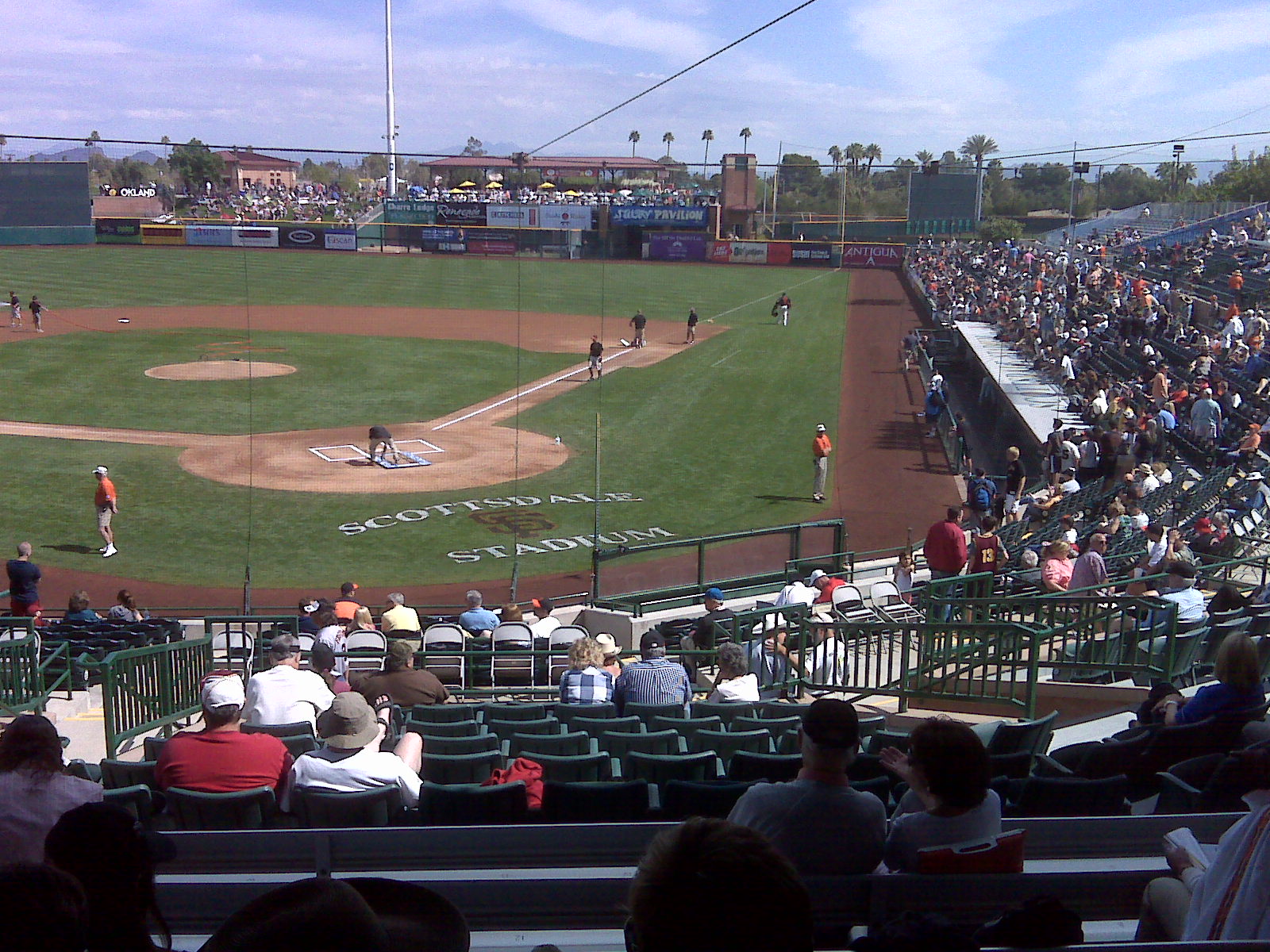
It’s a beautiful Saturday afternoon at Scottsdale Stadium, perfect for some Spring Training baseball.
Here’s the lineup for today. We’re going to get our first look at Jeff Bailey in the starting lineup, as well as our first glimpse of Edwin Jackson.
D-backs
SS – Stephen Drew
CF – Chris Young
LF – Conor Jackson
3B – Mark Reynolds
C – Miguel Montero
1B – Jeff Bailey
2B – Kelly Johnson
RF – Cole Gillespie
SP – Edwin Jackson
Giants
CF – Aaron Rowand
SS – Edgar Renteria
3B – Pablo Sandoval
1B – Aubrey Huff
C – Bengie Molina
LF – John Bowker
RF – Eugenio Velez
2B – Matt Downs
SP – Jonathan Sanchez
I made it out to batting practice to shoot some video. Here are Justin Upton, Kelly Johnson and Miguel Montero taking BP today:
UptonBP from D-backs Insider on Vimeo.
KellyJohnsonBP from D-backs Insider on Vimeo.
A Few Notes from Mesa

Made it out to HoHoKam Stadium for some Cubs and D-backs spring baseball. A few notes:
— Brandon Allen had a number of hard-hit line drives in batting practice, and some shots to the gap. Yesterday, he hit a triple to the gap and if you’ve never seen Allen run, he moves really well for a guy his size. That’s all good to see from a player who can hopefully use this Spring Training to springboard a productive year at either Triple-A Reno or in some role at the Major League level. After batting practice, you couldn’t help but notice Allen sit down next to Adam LaRoche in the D-backs dugout. To this point, he seems to be handling his situation exactly how you would hope a young player would, taking advantage of LaRoche’s knowledge and experience. We’ll try to catch up with Brandon at some point soon and get his thoughts on the spring so far.
— Billy Buckner settled down after a rough start to yesterday’s game, retiring his last five batters. As I mentioned here last week, he’s one of the guys you should really keep an eye on this spring. He’s fighting for a spot in the rotation, as the fourth and fifth spots both seem to be up for grabs at the outset.
— D-backs General Manager Josh Byrnes said today that while the team would like to see Brandon Webb start the regular season right away, the club plans to be cautious and realistic about his bounce back from a shoulder injury.
“It’s going to be a gradual process,” Byrnes said. “We’re into games, so we’re starting to think about where he fits into the schedule. We’ll continue to keep him moving along. It’s a long season. If we get 30 starts from him, great. If we get 20 from him, that’s great. We just need to get it right.
“If we have to concede a little bit of time at the front end of the schedule to keep him healthy for the long haul then that’s what we’ll do.”
This might make Buckner’s performance that much more important to monitor, as there is at least some small possibility that it could be three rotation spots — not two — that need filling for early April.
— Edwin Jackson will make the start for the D-backs on Saturday in Scottsdale against the Giants.
— It was interesting to see infielders Starlin Castro and Josh Vitters, and outfielder Brett Jackson in the lineup for the Cubs today. According to ESPN’s Keith Law, they’re three of the Cubs’ five best prospects, and Castro and Vitters are two of the top 30 in the league. If you’re into prospect watching like me, I’ll post a blog in the next few days with the prospects you should keep an eye on when you attend D-backs games this Spring Training.

First base coach Matt Williams ran infield practice before the game.
**Update**
— Justin Upton just blasted a three-run sixth-inning home run off the scoreboard in left field, his first of the Spring. It’s the fifth run the D-backs have scored this inning, as they lead the Cubs 5-4.
— Dan Haren had a nice, smooth-sailing outing here in Mesa. Two innings, no hits, one walk, one strikeout.
— Ryan Roberts just hit a homer clear out of the stadium, between the left-field foult pole and the scoreboard. 6-4 D-backs in the top of the seventh.
— Cole Gillespie just went deep to break a tie for the D-backs in the top of the ninth, 7-6 good guys. Keep your eye on Gillespie, he might contribute at the big league level this year.
— Tough loss, with the Cubs winning it 8-7 on a deep walk-off double.
D-backs Keep Budding Superstar in Phoenix Part III
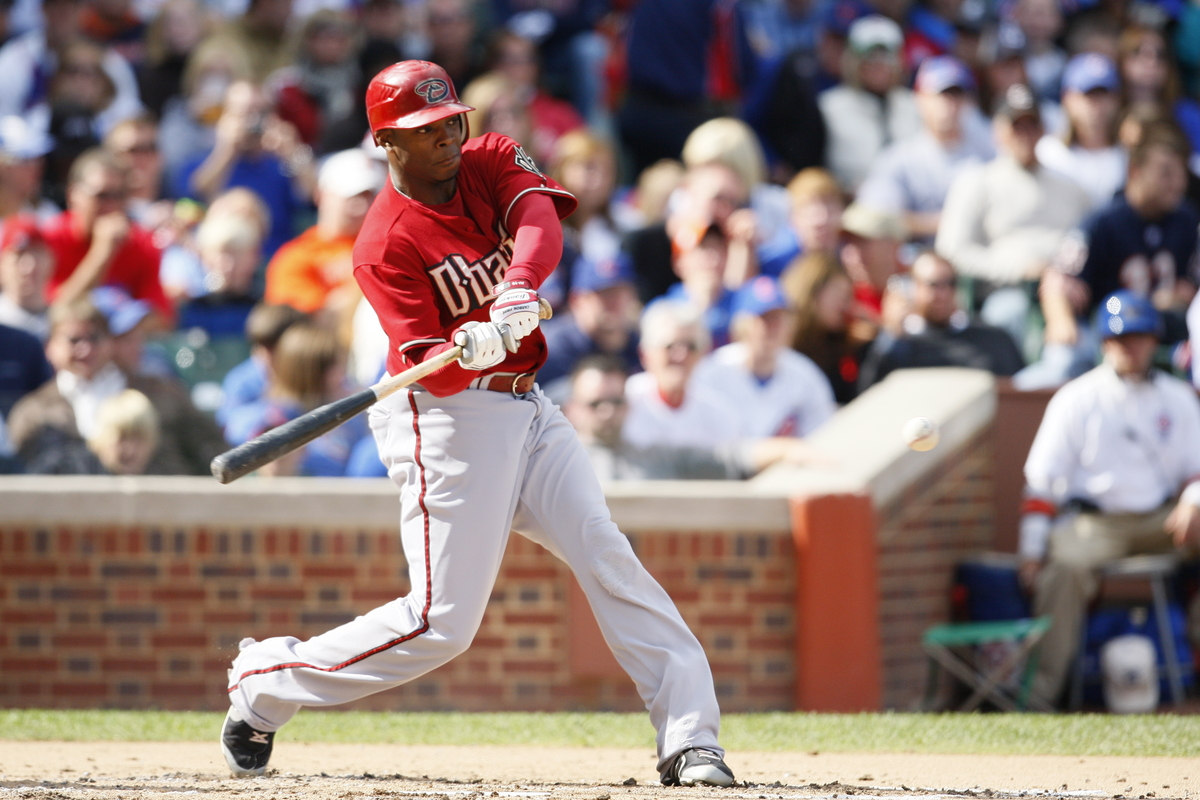
Justin Upton is the star of baseball’s most recent stellar draft class.
The 2005 Major League draft might end up being to baseball what the 1984 draft was for the NBA (Michael Jordan, Hakeem Olajuwon, Charles Barkley and John Stockton) or what the 1983 draft was for the NFL (John Elway, Eric Dickerson, Bruce Matthews, Jim Kelley, Dan Marino and Darrel Green). Those were drafts that defined the superstars of their sport for the next two decades.
Take a look again at the top 10 of the 2005 MLB draft:
1. Justin Upton, D-backs
2. Alex Gordon, Royals
3. Jeff Clement, Mariners
4. Jeff Zimmerman, Nationals
5. Ryan Braun, Brewers
6. Ricky Romero, Blue Jays
7. Troy Tulowitzki, Rockies
8. Wade Townsend, Rays
9. Mike Pelfrey, Mets
10. Cameron Maybin, Tigers
Upton, Zimmerman and Braun have all been to the All-Star Game already. Tulowitzki finished fifth in MVP voting in 2009. Maybin has developed a little slower than his fellow first-round batters, but should get plenty of at bats to show his talent in Florida this year. Romero had a nice rookie season for the Blue Jays last year. Only Townsend hasn’t played in the big leagues.
Outside of the top 10 in the first round of that draft, you’ll find Andrew McCutchen, Jay Bruce, Jacoby Ellsbury, Matt Garza, Colby Rasmus and Clay Buchholz.
After the first round, there was 22nd round pick Tommy Hanson, Nolan Reimold, Kevin Slowey, Yunel Escobar and John Lannan.
(Four future stars were also picked that year, but won’t be considered members of this class because didn’t sign until being drafted again in 2006, including all stars Tim Lincecum and Andrew Bailey, along with two of the top 15 prospects in baseball, Buster Posey and Brian Matusz.)
It’s very possible that over the next decade or two, a good amount of the biggest stars in the game are in this particular draft class. Upton was at the top of this class five years ago, and there’s no reason he can’t stay at the top of it.
D-backs Keep Budding Superstar in Phoenix Part II
In the last blog post, we compared Justin Upton to some of the best young hitters historically, in this post we’ll compare this contract with the deals signed by some of the other young stars in the league.
Since the mid 1990s, it has become a common trend for teams to reach four-to-six year deals with players as they near free agency, in most cases buying out arbitration years and a year or two of free agency. Here is Upton’s deal compared to the deals signed by some of the other young stars of the game, sorted by the OPS each had with a similar amount of service time.
– – – – – – – – – – – Age – Service Time – – Years – – – OPS – – – Contract
Ryan Braun – – – – 24 – – – 1.129 – – – 2007-08 – – – .937 – – – 8 years (2008-15), $45M
Hanley Ramirez – 23 – – – 2.014 – – – 2005-07 – – – .889 – – – 6 years (2009-14), $70M
Evan Longoria – – 23 – – – 1.170 – – – 2008-09 – – – .883 – – – 6 years (2008-13), $17.5M
Justin Upton – – – 21 – – – 2.060 – – – 2007-09 – – – .836 – – 6 years (2010-15), $51.25M
Nick Markakis – – – 23 – – – 2.000 – – – 2006-07 – – – .826 – – 6 years (2009-14), $66.1M
Ryan Zimmerman 23 – – – 2.032 – – – 2005-07 – – – .812 – – – 5 years (2009-13), $45M
Troy Tulowitzki – – 23 – – – 2.033 – – – 2006-08 – – – .781 – – – 6 years (2008-13), $31M
It should probably be noted here that Longoria’s number is significantly smaller than the rest, but he signed his contract when he was just six days into his Major League career, so he gave up less in terms of arbitration plus free agency time than the rest.
A few other notable position players with similar deals include Dustin Pedroia (6 years, $40.5M), Kevin Youkilis (4 years, $41.125M), David Wright (6 years, $55M), Jose Reyes (4 years, $23M), Jimmy Rollins (5 years, $40M), Carl Crawford (6 years, $33.25M after two exercised options), Robinson Cano (4 years, $30M plus another two options worth $29M).
There is always some risk in a long-term deal of course, but the bet the team is making is that this may cost the organization less in the long run than if they waited, played the years out, and watched the player blossom into an All-Star. In a case of a team waiting longer to extend a player, the Braves extended Andruw Jones five years into his big league career back in 2002, and paid $75M over six years to do it. The Phillies signed Chase Utley after three-plus years of big league service and worked out an $85M deal over seven years. The Twins signed Justin Morneau with nearly identical service time to Utley for $80M over six years. They also signed Joe Mauer to a $33M contract over four years, but didn’t buy out any free agency time.
The most recent example of a player playing out significantly more service time — and a guy who is fairly comparable to Upton offensively — is Detroit Tigers slugger Miguel Cabrera, who had amassed nearly five years of service time before signing an eight year contract worth $152.3 million.
The key is timing – the closer a player is to free agency, the closer the contract will be to an open-market deal. The goal for the team is signing the contract early enough that the club potentially saves some money in the long term, but not too early as to risk a player not developing as expected.
In this case, comparing Upton’s ability and his contract with his peers, it seems that Upton made the right decision in establishing some significant security this early in his career, and the D-backs made the right decision in guaranteeing themselves eight years of control for one of the best young players in the game while still having enough financial flexibility to work out long-term deals with some of the other young stars on the team.
 The D-blog